What is Vibe Coding? The 2026 Guide to AI-Native Software Development
What is Vibe Coding?
In 2026, software development is no longer defined by how fast you can type or how many frameworks you’ve memorized. The game has shifted — and the name of the new game is Vibe Coding.
Vibe Coding is the practice of building functional, production-ready software primarily through natural language conversation with AI coding agents — tools like Cursor, Copilot, Claude Code, and custom AI architectures. Instead of writing every line of code manually, developers describe what they want, review what the AI generates, and iterate through conversation. The result? Software that ships in days rather than months.
And this isn’t a fringe experiment. Enterprise teams in Singapore, Australia, the US, and Europe are already adopting Vibe Coding as a core delivery methodology — especially when paired with experienced senior engineering oversight from partner teams in places like Indonesia.
The Evolution: From Manual Coding to Conversational Development
To understand Vibe Coding, it helps to look at how we got here.
The Pre-2023 Era: Manual Everything
Before the AI coding wave, every feature required a developer to write — line by line — the logic, the error handling, the tests, and the documentation. A typical MVP (Minimum Viable Product) could take 3 to 6 months to build with a dedicated team. Speed was constrained by typing speed, debugging time, and the cognitive load of context-switching between dozens of files.
2023-2024: AI-Assisted Coding
Tools like GitHub Copilot and early versions of ChatGPT introduced autocomplete and code generation. Developers could generate snippets, boilerplate, and simple functions through prompts. But the architecture — the skeleton of the application — still required deep manual planning. AI was a junior assistant at best.
2025-2026: The Vibe Coding Era
Everything changed when AI coding agents matured to the point where they could understand full project context, manage multi-file changes, scaffold entire applications from a single prompt, and even debug themselves. Cursor, Claude Code, Windsurf, and open-source alternatives like Continue.dev became the new IDE standard. Developers shifted from writing code to directing code — describing intent, reviewing output, and guiding the agent toward the right technical decisions.
This is Vibe Coding. And it works because AI handles the mechanical complexity, while humans handle the strategic decisions.
Key Principles of Vibe Coding in 2026
1. Intent over Implementation
In traditional development, the implementation is the specification. You write code that says exactly what you want. In Vibe Coding, you describe what you want in natural language — the AI translates that into working code. The developer’s job shifts from “how do I write this?” to “what should this system do?”
2. Iterative Conversation, Not Linear Writing
Instead of writing a design doc, then code, then tests, then deploy — Vibe Coding wraps all of these into a single conversational loop. You say “build me a login system with JWT, rate limiting, and error tracking,” review the generated code, ask for modifications, and ship. One conversation replaces weeks of sequential work.
3. Senior Oversight is Non-Negotiable
This is the most important principle. Vibe Coding without senior oversight is dangerous. AI coding agents are incredibly productive, but they don’t understand your business domain, your security requirements, your compliance obligations, or your long-term architecture goals. Every AI-generated feature needs to be reviewed by an experienced engineer who understands the why behind the what.
This is precisely why companies like Smooets pair Vibe Coding with senior architect supervision — you get the speed of AI with the quality assurance of human expertise.
4. AI is the Junior Developer; You Are the Senior Architect
A common misconception is that Vibe Coding replaces developers. It doesn’t. It relevels them. The AI handles syntax, boilerplate, routing, database queries, and API integrations — freeing the human to focus on product strategy, system design, data modeling, and business logic. The best Vibe Coding teams are led by senior architects who know exactly what to ask the AI, and more importantly, what not to trust.
Why Vibe Coding is a Competitive Advantage for Startups and Enterprises
Speed to Market
The most obvious benefit: Vibe Coding dramatically reduces development time. What used to take a team of five developers three months can now be done by one senior architect and an AI agent in two to three weeks. For startups racing to validate a product before funding runs out, this is transformative.
Cost Efficiency
Fewer developers, faster delivery. The economics are straightforward. A senior architect paired with AI coding tools can match or exceed the output of a traditional team of 3-4 mid-level developers — at a fraction of the cost. For companies already working with outsourced engineering pods, the cost savings compound further.
Quality Through Iteration
Because Vibe Coding is conversational, you can refine a feature multiple times before committing. The AI generates a version, the developer reviews and requests changes, and the cycle repeats until the output is production-ready. This iterative refinement catches edge cases, improves code quality, and reduces the number of bugs that make it to production.
Democratized Development
Non-technical founders and product managers can now participate meaningfully in the development process. While you still need technical oversight for production-grade systems, Vibe Coding lowers the barrier for prototyping and exploration. A founder with a clear product vision can describe it to an AI, get a working prototype, and only then bring in senior engineers to harden it for production.
The Smooets Approach to Vibe Coding
At Smooets, we’ve operationalized Vibe Coding as a structured, auditable engineering methodology — not just a free-for-all with AI tools.
1. Senior Architect-Led Delivery Pods
Every Vibe Coding engagement is led by a senior software architect with 10+ years of experience. The architect designs the system, defines the prompts, reviews every commit, and signs off on every deployment. The AI agent does the heavy lifting; the architect ensures the output is secure, scalable, and maintainable.
2. Cursor + Custom Toolchains
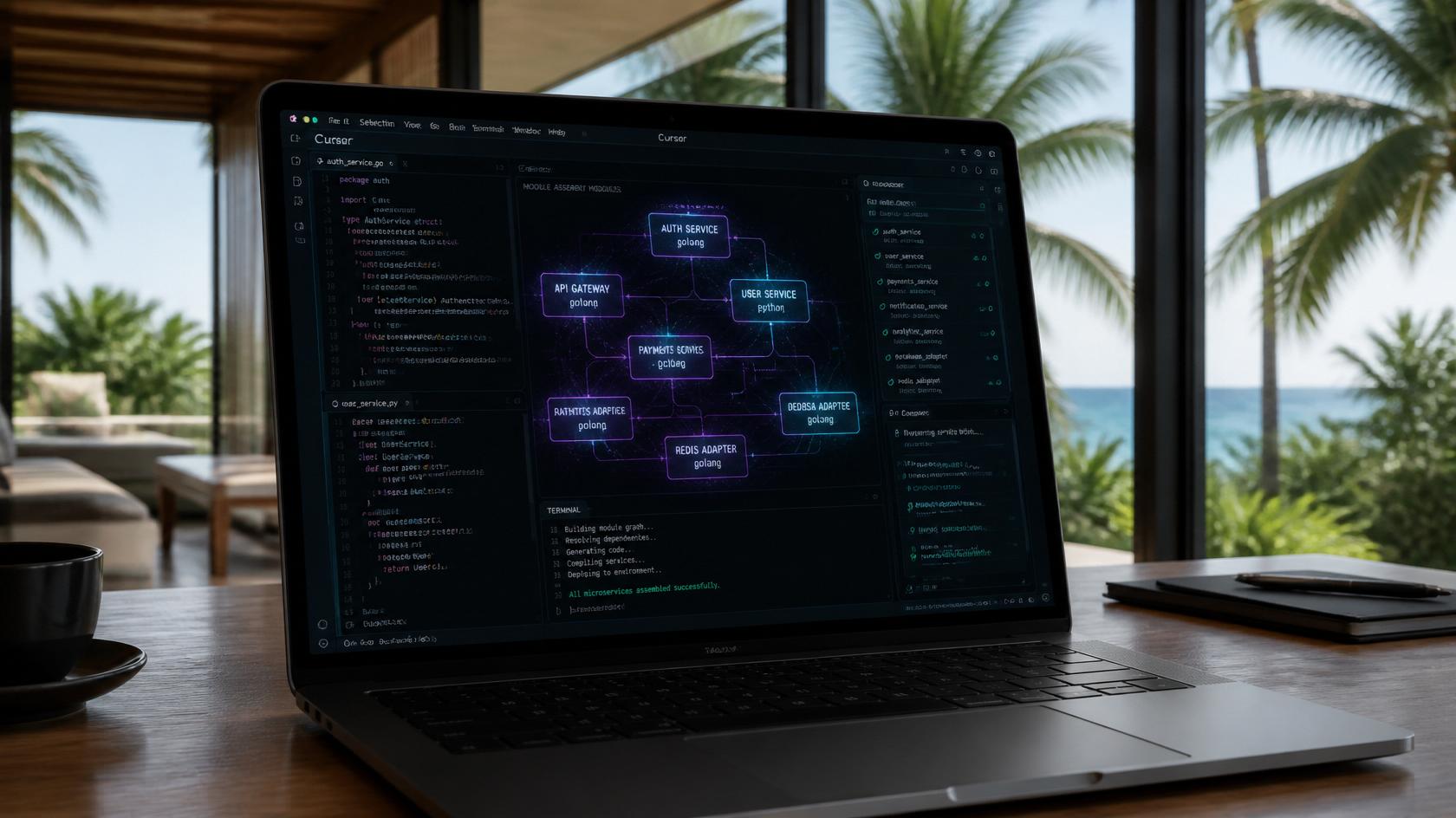
We use Cursor as our primary Vibe Coding IDE, augmented with custom Smooets workflows, proprietary prompt libraries, and integration with GitHub Actions for automated testing and deployment. This gives us the speed of AI-assisted coding with the rigor of enterprise CI/CD pipelines.
3. Vibe Coding + Traditional Engineering = Hybrid Delivery
We don’t believe in all-or-nothing. Some components — like critical payment systems, auth flows, and data pipelines — benefit from manual engineering with AI assistance. Others — like CRUD APIs, admin dashboards, and frontend components — are perfect for full Vibe Coding. We apply the right tool for each layer of the stack.
4. Transparent Audit Trails
Every line of AI-generated code is logged, tagged, and traceable. Our clients can see exactly what was generated by AI vs. written by a human engineer. This matters for compliance, security audits, and intellectual property protection.
Should You Adopt Vibe Coding?
Here’s a simple framework to decide:
- Prototyping an MVP? Vibe Coding is your fastest path to a shippable product. Start with a senior architect, describe your vision, and iterate.
- Scaling an existing product? Use Vibe Coding selectively — for feature development, API integrations, and frontend components. Keep mission-critical systems under manual engineering with AI assistance.
- Building enterprise infrastructure? Use Vibe Coding for rapid iteration during POCs and prototyping. Your production infrastructure should still follow rigorous security and compliance protocols — but AI can accelerate the implementation.
Get Started with Vibe Coding
The Vibe Coding revolution is already here. Companies that adopt it early will outpace competitors who stick to traditional development processes. But the key — as with any powerful tool — is using it correctly.
If you’re ready to explore how Vibe Coding can accelerate your next project, Smooets offers a free 1-month MVP slot to qualified startups and enterprises. You’ll work with a senior architect who knows exactly how to extract maximum value from AI coding agents — while keeping your codebase maintainable, secure, and production-ready.
Leave a Reply
You must be logged in to post a comment.