
AI Agents In Software Development In 2026: How Autonomous Coding Tools Are Reshaping Delivery Teams
Something changed in software delivery between 2024 and 2026, and it did not look like the demo videos. It looked like a pull request queue that grew faster than anyone could review it. One payments squad we work with pushed 38% more pull requests in the first quarter of 2026 than in the same quarter a year earlier, with the same seven engineers. Nobody got replaced. The work simply started arriving in a different shape.
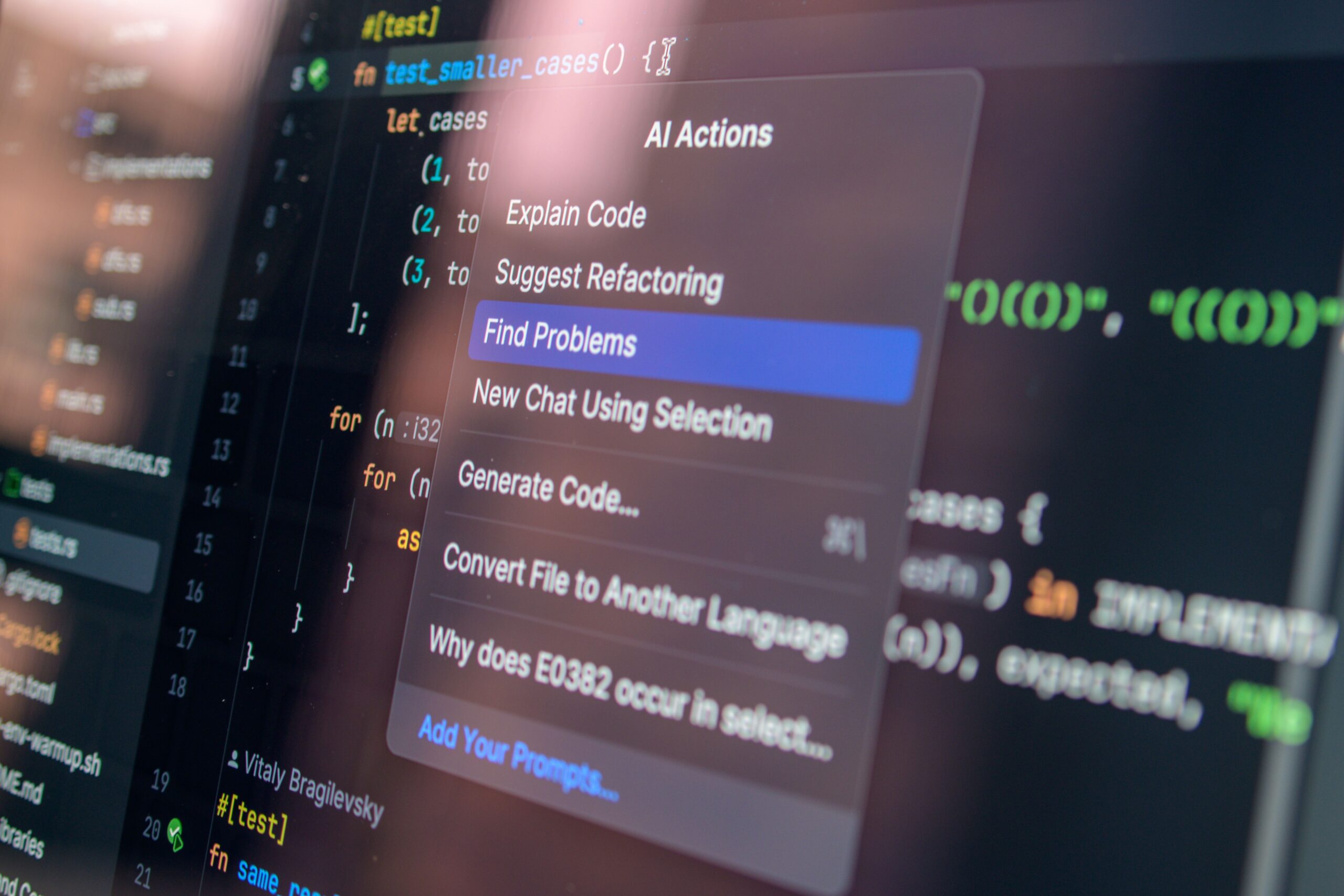
That shift is what people mean when they talk about AI agents in software development. Not a chatbot that suggests a line of code you still have to paste. Not autocomplete. Agents that read a ticket, open a branch, edit six files, run the test suite, and hand back a pull request you can review. The honest questions are no longer “does this work at all?” They are “where does it save real hours, where does it quietly break things, and how do we keep a human accountable for every change that reaches production?”
This guide is a practical look at what agents actually do inside professional delivery teams in 2026. Concrete tasks, concrete numbers, concrete failure modes. No hype about replacing engineers, and no nostalgia about the old way being perfect either.
What An “AI Agent” Actually Is Inside A Delivery Team
The word agent gets stretched until it means everything. It helps to separate three levels, because they behave very differently in production.
| Level | What it does | Typical task | Realistic saving |
|---|---|---|---|
| Assistant | Suggests code as you type | Writing a function, boilerplate | 10-20% on typing-heavy work |
| Task agent | Runs tools, edits multiple files, executes tests | Upgrade a library, backfill tests | 30-60% on well-scoped chores |
| Autonomous agent | Takes a ticket to an open pull request with minimal prompting | Small feature, bug fix with clear reproduction | Highly variable; needs strong guardrails |
Most teams in 2026 are living in the middle row. The assistant level is now boring and expected. The autonomous level is where the impressive demos live and where the expensive mistakes hide. The task agent level, the unglamorous middle, is where the measurable value sits.
The distinction matters because a task agent has a bounded definition of done. “Upgrade this package and make the tests pass” is checkable. “Improve this service” is not. Agents are excellent at chasing a clear finish line and dangerously confident when the finish line is blurry.
Where Agents Genuinely Earn Their Keep
After watching a few dozen teams adopt these tools, the pattern is consistent. Agents do well where the work is repetitive, verifiable, and testable. They struggle where judgment and context dominate.
Test coverage backfill
This is the single most reliable win. Legacy modules often sit at 20-40% coverage because nobody had time. A task agent can read a class, infer behavior, and draft test cases in an afternoon. One team we worked with brought a billing module from 31% to 74% coverage over three weeks, with about a third of the generated tests needing meaningful edits. A third needing rework sounds bad until you remember those tests all existed in a pull request instead of a backlog ticket, and a human made the final call on every one.
Framework and dependency upgrades
Upgrades are mechanical pain. The migration guide is public, the patterns are known, and the compiler tells you when you are wrong. A React 18 to React 19 upgrade that used to consume two engineers for a sprint got compressed into a week of agent-assisted work plus two days of focused human review. The agent handled the repetitive import changes and the obvious API swaps; the humans handled the lifecycle edge cases and the performance regressions the agent could not see.
Wide but shallow refactors
Renaming a concept across 240 files, swapping a logging library, removing a deprecated helper. These tasks are large in surface area and small in cognitive depth, which is exactly the shape agents handle well. A human defines the pattern once, the agent applies it everywhere, and the diff gets reviewed for consistency rather than correctness.
Documentation and changelogs
Nobody enjoys writing changelogs. Agents are good at it because the input, a set of merged pull requests, is right there. Teams that kept their changelog empty for years now publish one every release. That is a small win individually and a significant one across a year.
Dependency and CVE triage
Security advisories arrive constantly. An agent can scan a dependency tree, check which advisories touch code paths you actually use, and prepare upgrade pull requests for the safe ones. Humans still decide what ships, but the triage queue shrinks from hours to minutes.
Where Agents Quietly Fail
The failures are less dramatic than the demos and more expensive than the wins, because they are easy to miss.
Ambiguous requirements
Give an agent a vague ticket and it will produce a confident, plausible, wrong solution. The same ticket given to a junior engineer triggers questions. Agents rarely ask. They fill gaps with the most common pattern they have seen, which may have nothing to do with your business rules. In a scheduling product, “handle overlapping bookings” could mean reject the second, merge them, or queue it. The agent picked one, and the bug reached a demo before anyone noticed.
Legacy code without tests
Agents lean on tests as a feedback loop. Remove that loop and they are guessing with extra confidence. On a ten-year-old codebase with sparse tests, an agent-assisted refactor can pass every check it can run while quietly changing behavior nobody covered. The fix is not to ban agents there. It is to add tests first, then let the agent move.
Security and secrets
Agents run commands. Commands can read files, install packages, and call the network. A misconfigured agent with broad credentials can leak a secret into a log, pull a typosquatted package, or push to the wrong branch. Teams that treated agent setup as “just install the tool” learned this the hard way. Default-deny permissions, sandboxed execution, and no access to production credentials are not optional.
Performance work
Performance requires measurement. An agent can pattern-match a known optimization and make the code look faster, but without profiling data it is guessing. The teams that got burned here shipped changes that passed review and made latency worse because nobody ran a benchmark.
Anything touching production data
Schema migrations, data backfills, irreversible operations. These need a human who understands the blast radius. Agents can help draft the script and the rollback. They should not decide to run it.
One Ticket, End To End: What This Looks Like In Practice
Abstract benefits are easy to write about. A worked example is harder to fake.
Step one: the ticket
A support tool needs to stop duplicating customers when two records share an email but differ in casing. The ticket names the table, the field, and the expected behavior. It includes one example record and a note that a nightly import is the source of the duplicates. That level of detail takes a product owner fifteen minutes to write and saves hours later.
Step two: the agent run
The agent reads the ticket, locates the import routine, adds a normalization step, writes a migration to merge the existing duplicates, and drafts four tests covering exact matches, mixed case, trailing whitespace, and non-matching records. It opens a pull request with a short summary of what it changed and why. Total wall-clock time: about eleven minutes, including a failed test run it corrected on its own.
Step three: the review
An engineer reads the diff on a phone during a standup. The migration is the part that gets real scrutiny, because it touches production data and runs once. The tests look sound. The reviewer notices that the merge logic keeps the older record, which is wrong for this business, and requests a change. The agent revises it in ninety seconds. The second review takes four minutes.
Step four: the merge and the follow-up
The change merges behind the normal gates. It runs in staging for a day, then in production during a low-traffic window. Nothing breaks, and the recurring support ticket disappears. The engineer adds one note to the repository about which record should win ties, so the next agent that touches this code has the context it lacked. That note is worth more than the original pull request.
The lesson from this kind of loop is unglamorous. The agent did the typing, but the value came from a precise ticket, a protected migration path, and a reviewer willing to say no. Take away any one of those and the same workflow produces a clever-looking change that quietly corrupts customer records.
The Economics Nobody Puts In The Slide Deck
The pitch is simple: more output for the same team. The reality is more nuanced, and the numbers matter.
- Cost per task is small, review cost is not. A typical agent run costs between twenty cents and a few dollars in model usage. The same run can create forty minutes of review for a senior engineer. Cheap generation, expensive verification.
- Throughput goes up before quality does. In the first month, most teams see pull request volume jump before they see review capacity adapt. The queue is the first thing that breaks.
- Rework rate is the number to watch. Across teams we have observed, roughly one in five agent-generated pull requests needed substantive changes before merge, and a smaller slice needed to be abandoned. That is not a failure of the tool. It is the true cost of the workflow, and it belongs in your planning.
- Onboarding time drops, context time rises. Agents produce unfamiliar code faster, which means reviewers spend more time understanding changes they did not write. Small pull requests matter more than ever.
The teams that report genuine net gains all did the same thing: they measured review load, not just generation speed. If your team can merge and verify more work per week without cutting tests, the tools are paying off. If the pull request queue is silently growing, you have moved the bottleneck, not removed it.
How A Professional Team Actually Runs Agents
Tooling is the easy part. Process is what separates a team that benefits from agents and a team that inherits a mess.
Guardrails that are non-negotiable
- Pull requests only. No agent writes directly to a shared branch. Every change is reviewable and revertable.
- Scoped credentials. Agents get sandboxed environments and never touch production secrets, keys, or databases.
- Pinned dependencies. No silent installs from unknown registries. Lock files are enforced in CI.
- Human accountability. Every merged change has a named human owner. “The agent did it” is not a defense and never will be.
- Audit logging. Which agent, which model, which prompt, which files. If you cannot reconstruct how a change happened, you cannot learn from it.
CI gates that catch agent mistakes
Agents get a bad reputation when they are measured on output and not on verification. The fix is a pipeline that fails loudly. Linting, unit tests, integration tests, a coverage threshold, a dependency scanner, and a secret detector. A pull request that trips any of these never reaches a human reviewer, which keeps review time focused on logic instead of cleanup. This is the same discipline pagii.co applies across its product teams, and it is exactly what makes agent-assisted work safe rather than risky.
Measure the right things
Track agent-generated pull requests as their own category. Then watch four numbers: rework rate, review latency, escaped defects, and cost per merged change. If agent work has a higher escaped defect rate than human work after applying the same tests, the workflow needs tightening before it scales. Most teams find that after two or three months, the gap closes, because the tests and conventions the agents needed were gaps in the team’s own discipline all along.
Context Is The Real Bottleneck Now
Generation is nearly free. Context is not. The hard part of agent-assisted development in 2026 is feeding the agent enough of your codebase, conventions, and intent that its output is worth reviewing.
Teams that do this well invest in three things. A clean repository layout, because agents navigate directories and a mess costs tokens and accuracy. Written conventions, because an architecture decision record that lives in someone’s head helps nobody. And small, well-described tickets, because a clear description is the difference between a useful pull request and a plausible guess.
This is why senior engineers became more valuable, not less. The skill of explaining a problem precisely, choosing the right scope, and judging whether a diff is correct does not get automated. It gets amplified.
What This Means If You Are Buying Software
If you run a business and commission software, this shift changes what to ask a vendor.
- How do you use AI, and how do you verify it? A serious answer mentions review, tests, and accountability. A weak answer mentions speed.
- Who owns the generated code? Your contract should be explicit about intellectual property and about whether your code is used to train models.
- How is our data handled? Ask whether prompts and code leave your jurisdiction and whether the vendor can opt out of model training.
- What are your guardrails? Sandboxing, credential scoping, and audit logs tell you whether the vendor treats your codebase as a production asset.
The vendors worth trusting are not the ones with the loudest AI claims. They are the ones who can describe their review process, their test thresholds, and their rollback plan without flinching.
A 30/60/90 Day Adoption Plan That Works
Most failed rollouts tried to change everything at once. Start narrow.
First 30 days: measure the baseline
Enable assistant-level tooling for the whole team. Pick two non-critical repositories. Record pull request volume, review time, and escaped defects before you change any process. You cannot claim an improvement you never measured.
Days 30 to 60: add task agents for chores
Introduce agents for tests, upgrades, and documentation on the same two repositories. Put guardrails in place first. Keep pull requests small. Track the rework rate openly, without treating it as a failure.
Days 60 to 90: expand and formalize
Roll the workflow to more repositories if the numbers held. Write down the conventions agents keep getting wrong, and fix them in the codebase rather than in a prompt. Train the team on context writing and review discipline. Then decide where, if anywhere, autonomy is worth the risk.
Skills That Still Matter, And Matter More
Reading code you did not write. Debugging a failure the agent cannot reproduce. Designing a system so its boundaries make sense. Writing a specification clean enough that a stranger can implement it. Judging a diff in ninety seconds and knowing which thirty lines deserve scrutiny. None of these disappear. They become the core of the job while the typing fades into the background.
The engineers who struggle in 2026 are the ones who defined themselves by output volume. The ones who thrive are the ones who own outcomes and can explain why a change is safe.
Frequently Asked Questions
Will AI agents replace software developers in 2026?
No. They replace specific tasks, not roles. The work of understanding a business problem, designing a solution, and taking responsibility for it in production still needs people. What changes is the ratio of writing to judging. Teams that lean into the judging side grow; teams that outsource judgment get burned.
Are AI coding agents safe for enterprise codebases?
They are as safe as the process around them. With pull-request-only workflows, scoped credentials, sandboxed execution, and enforced CI gates, agent work is no riskier than human work. Without those controls, an agent is a fast way to spread a mistake across hundreds of files.
How much do AI agents cost per developer?
Tooling subscriptions vary, but the number that surprises teams is the review cost, not the model cost. Budget for model usage in the tens of dollars per developer per month, and budget for the review time agents create. The hidden expense is the senior engineer hour spent verifying generated code.
What should I never hand to an AI agent?
Irreversible operations on production data. Anything involving secrets or credentials. Performance decisions without measurement. And any task where “looks correct” is the only available verification, because that is exactly the condition under which agents fail silently.
Do AI agents work on legacy codebases?
They can, but the order matters. Add tests first, then let the agent refactor. On a codebase with no safety net, an agent can pass every check it can run and still change behavior nobody covered. The net comes first.
How do I measure the ROI of AI agents on my team?
Measure review latency, rework rate, escaped defects, and cost per merged change, and compare agent-generated work against human work. Ignore raw lines of code and ignore raw pull request counts. Throughput without verification is not progress.
Can AI agents help with security work?
Yes, within limits. They are useful for dependency triage, secret scanning, and preparing patches for known vulnerabilities. They are not a substitute for threat modeling or for a human who understands your attack surface. Use them to clear the routine queue so your security people can focus on the hard problems.
Should I build AI features in-house or hire a software house?
It depends on whether AI is your product or a feature inside it. If AI is the product, deep in-house ownership is worth the cost. If AI is one feature in a larger platform, a software house that already runs agent-assisted delivery and has shipped AI integrations will usually get you there faster and cheaper. Ask any vendor to show you a production AI feature they operate, not a prototype. Prototypes are cheap; running an AI feature for two years without runaway model costs is the hard part.
Where This Is Heading
The honest summary is that agents did not replace the craft of software engineering. They removed the friction that used to protect teams from their own lack of discipline. When tests are thin, conventions are unwritten, and tickets are vague, agents amplify all three. When those foundations are solid, agents amplify the good parts.
That is why the teams getting value in 2026 look unremarkable from the outside. They write small pull requests. They test before they refactor. They keep credentials scoped and logs intact. They treat a generated change exactly like a change from a new hire: reviewable, revertable, and owned by a human. The tool is new. The discipline is old, and it is still the thing that decides who ships software well and who ships software fast into a wall.
If you are commissioning software rather than building it, ask your vendor to describe that discipline. It will tell you more about the outcome than any feature list. And if you want to see what careful AI-assisted product work looks like in practice, pagii.co is a useful reference point: a team shipping real business tools, with the review habits to match.
Leave a Reply
You must be logged in to post a comment.