
Vibe Coding Security: How We Audit AI-Generated Code for Enterprise Standards.
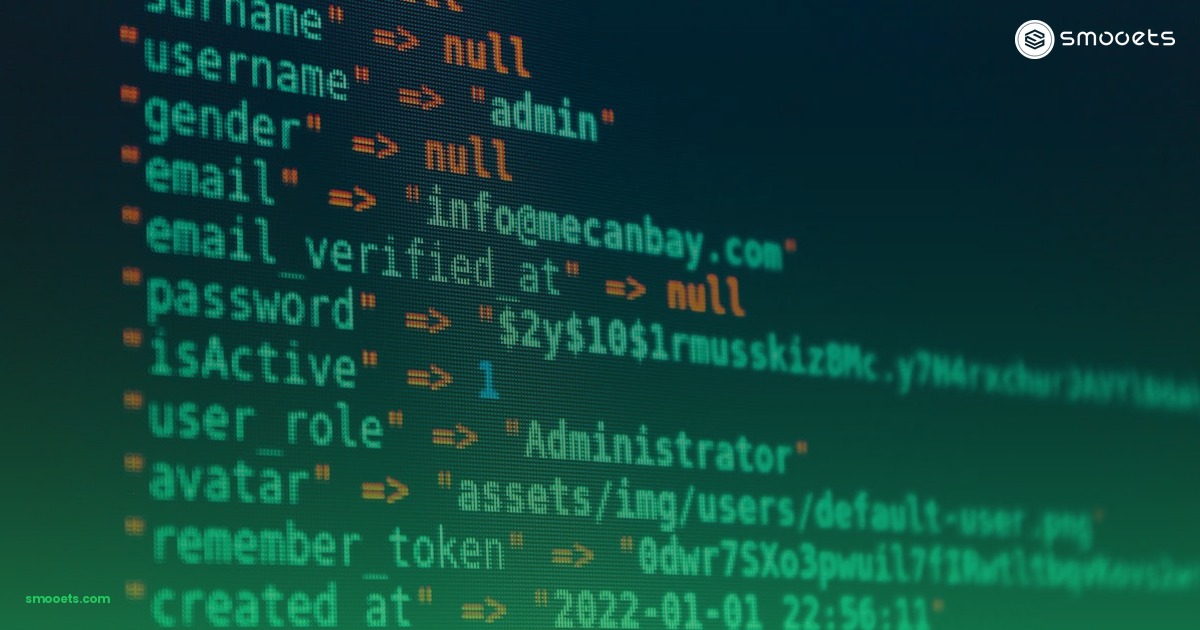
AI Overview: Vibe coding has emerged as a powerful paradigm where developers use AI tools to generate code at unprecedented speed. But speed without governance creates security debt. This article outlines how Smooets’ Senior Architect-led audit framework ensures AI-generated code meets enterprise-grade security, compliance, and performance standards bridging the gap between rapid prototyping and production-ready software.
Vibe coding the practice of expressing intent in natural language and letting AI generate the implementation, is transforming how software gets built. Teams using Cursor, GitHub Copilot, and Windsurf are shipping features faster than ever. Yet for enterprises operating in Australia, Singapore, and the United States, the question isn’t “can AI write code?” but “can we trust that code in production?”
At Smooets, we’ve built a structured audit methodology that turns AI-generated code into enterprise-ready assets. Every AI-produced block passes through a human-in-the-loop review cycle led by Senior Software Architects. Here’s how it works.
The Security Gap in AI-Generated Code
AI coding assistants are trained on public repositories. That means they inherit both the patterns and the vulnerabilities present in open-source codebases. Studies from OWASP and NIST show that AI-generated code frequently contains:
- SQL injection vectors in dynamically constructed queries
- Hardcoded credentials or API keys in configuration blocks
- Improper input sanitisation in user-facing endpoints
- Race conditions in concurrent Go routines
- Missing or insufficient authentication guards in API middleware
These aren’t deal-breakers, they’re audit findings. The difference between a security incident and a clean deployment is the rigour of your review process.
Our Four-Layer Audit Framework
1. Static Analysis & Linting Automation
Before any human reads a line, every AI-generated block passes through automated static analysis. We use SonarQube for comprehensive code quality scanning, GoSec for Golang-specific security patterns, and PHPStan at level-max for Laravel code. This first pass catches obvious injection risks, deprecated function usage, and style violations, reducing the human review burden by approximately 60%.
2. Senior Architect Human Review
Automated tools miss context. A Senior Architect reviews each AI-generated module with specific attention to:
- Business logic correctness — does the AI understand the domain rule?
- Security context — is authentication scoped correctly for multi-tenant SaaS?
- Error handling strategy — are failures graceful or leaky?
- Architectural consistency — does the code follow the established module boundaries?
This is the human-in-the-loop layer that separates vibe coding from production engineering.
3. Integration & Contract Testing
AI models hallucinate APIs. They frequently invent method signatures or assume third-party services behave in idealised ways. Our automated integration test suite validates every boundary REST endpoints, queue workers, and database transactions before the code enters a staging environment. Teams working with React Native and Laravel backends benefit especially from contract tests that catch API mismatches early.
4. Compliance Mapping
Enterprise clients — particularly those in Australia bound by the Privacy Act 1988 or SG-regulated industries require documented audit trails. Our framework maps every code audit result to industry standards including SOC 2, ISO 27001, and the ASD Essential Eight. The result: your AI-accelerated development pipeline remains compliant with enterprise governance requirements.
How the Tech Stack Handles AI-Generated Code
| Technology | Common AI-Generated Issues | Smooets Audit Approach |
|---|---|---|
| Golang | Nil pointer dereferences, goroutine leaks, improper context propagation | GoSec + race detector + Architect review of concurrent patterns |
| Laravel / PHP | Raw SQL queries, mass-assignment vulnerabilities, insecure serialisation | PHPStan level-max, Laravel security checklists, integration test coverage |
| React Native | Overly permissive permissions, insecure deep linking, unencrypted local storage | Mobile security scan, dependency audit, runtime permission review |
| Python (Data/ML) | Pickle deserialisation risks, insecure API clients, missing input validation | Bandit static analysis, dependency vulnerability scanning, review of data pipelines |
Tools of the Vibe Coding Era
The tools that make vibe coding possible also introduce new audit surfaces. Here’s how we approach the three major platforms:
- Cursor — We configure Cursor with custom rules files (
.cursorrules) that enforce security patterns at generation time. No package should be installed without explicit approval, and every environment variable must pass through a secrets manager. - GitHub Copilot — Copilot suggestions are reviewed in diff mode before acceptance. Our architects maintain a blocklist of patterns (insecure random generation, direct SQL concatenation) that trigger immediate rejection in code review.
- Windsurf — For frontend-heavy workflows, Windsurf-generated UI code undergoes accessibility and cross-browser compliance checks. AI frequently produces ARIA-incompliant markup, something our automated aXe scans catch before staging.
Case in Point: Auditing an AI-Generated API Gateway
A recent project involved building a customer-facing API gateway for a Singapore-based fintech client. The team used vibe coding with Cursor and Golang to scaffold the gateway in under three days, a task that would traditionally take two weeks. During the Senior Architect review, we identified:
- Missing rate-limiting middleware (would allow abuse)
- Improper JWT validation in the auth middleware (signature algorithm not enforced)
- Hardcoded database credentials in configuration structs
Each finding was fixed in under an hour. The code passed compliance review and deployed on schedule. That’s the value of structured auditing: speed, with confidence.
The Cost of Skipping the Audit
We’ve seen teams adopt vibe coding without governance. The patterns repeat: a rapid prototype reaches production, a security gap is discovered during penetration testing, and the remediation costs 10x what prevention would have. For enterprise clients in AU, SG, and US markets, a single data breach notification can cost upwards of AUD $2 million under the Notifiable Data Breaches scheme.
The choice isn’t between fast coding and secure coding. It’s between audited fast coding and unchecked fast coding.
CTA: Get Your Vibe Code Audited Free Strategy Consult
Smooets offers a Free Strategy Consult for teams adopting AI-assisted development. Our Senior Architects will review your current code generation workflow, identify audit gaps, and recommend a governance framework tailored to your tech stack, whether it’s Golang, Laravel, React Native, or Python.
Book your Free Strategy Consult →
Internal Resources
Serving Global Clients from Our Tech Hub in Bali
Leave a Reply
You must be logged in to post a comment.